 Statused
Slack
Learn how to set up Slack notifications for your app store status changes with Statused.
Supported Integration Methods
Authorize a workspace in Destinations and choose channels in your workflows with the native Statused Slack app. There’s no need to create your own Slack app or webhook.
Slack Incoming Webhooks and Slack Workflow webhooks remain supported and selectable as Legacy destinations. Migration is optional; existing workflows keep working.
Connect the Statused Slack app
A Statused account and an active trial or subscription for monitoring workflows are required. See pricing. Your Slack workspace may require administrator approval to install apps.
- Open Add Destination and choose Slack
- Choose Connect a new Slack workspace and authorize the intended workspace in Slack. If you cancel authorization, return to Destinations and start again
- Return to Statused and confirm the workspace is connected. There is no destination name or channel to enter here. If your workspace is already connected, continue to Workflows; you do not need a new destination for each channel
Choose channels in a workflow
- Open Workflows and add a workflow or edit an existing one
- Choose the source API key and app you want to monitor
- In Slack, search the channel picker and select one or more channels. Selected channels appear as removable pills. The picker loads all channel pages; refresh it after changing channel access
- Complete your workflow settings. To send to another connected workspace, open the Slack section’s actions menu and choose that workspace. You can also select other destinations
- Save the workflow, then open its actions menu in the Workflows list and choose Send Test Notification
Saving posts a setup confirmation to newly selected channels, mentioning your Slack profile when available (otherwise your Statused display name), and adds Statused to public channels if needed. Saving an unchanged Slack target does not post another setup confirmation.
Private channel missing?
Invite Statused to the private channel in Slack, then refresh the channel list. Statused only lists private channels the bot can access. DMs and archived channels are not supported.
Statused asks to send messages, discover and validate public channels and accessible private channels, join the public channel you select, and read workspace information to display its name and icon. It does not request message history or DM access. Installation alone does not post to other channels.
Reconnect or disconnect
Manage workspace connections in Destinations. Disconnect stops your account's delivery but retains destination and workflow configuration for reconnect. If another Statused account uses the same workspace, its connection continues working. Removing the app from Slack affects every connected account for that workspace.
Reconnect to the same workspace to restore the connection. For an active connection, use its actions menu to reconnect when updating permissions. To change where a workflow sends Slack messages, edit that workflow and choose its workspace and channel. Other workflows keep their own selections. If a channel is archived or the bot loses access, choose another channel or restore access and retry.
Native sends can be delayed by Slack rate limits and retried after temporary failures. Rare duplicate posts are possible after uncertain network outcomes. A test reports failure immediately if Slack does not confirm acceptance.
Read the Slack privacy disclosure for stored metadata, encrypted credentials, notification content, and the 30-day native delivery retention policy. Contact support if native installation is disabled or you need help.
Move a workflow from a legacy webhook to the Slack app
This is optional. You can keep using Slack Incoming Webhooks and Slack Workflow webhooks, including their existing formatting and automation.
- Connect the native Slack app to your workspace from Destinations using the steps above
- Edit the existing Statused workflow and keep its source API key, app, and notification settings
- Deselect the legacy Slack webhook destination you want to replace, then select the native Slack workspace and channel
- Save the workflow and use Send Test Notification to check the message in the intended channel. The change applies only to this workflow; other workflows using the legacy destination keep their existing settings
- Repeat for any other workflows you want to move. Remove the old webhook destination only after no remaining workflow needs it
Avoid duplicate notifications
If the legacy webhook and native Slack target both send to the same channel and both remain selected, that channel receives both notifications. Replace the selection when migrating rather than leaving both enabled.
Use a legacy Slack webhook
Highlights
- Requires Slack admin permissions
- No need to configure anything to format messages
Slack Incoming Webhooks remain useful if you already have an internal Slack app configured. You can check if you already have one by accessing your Slack Apps page (admin permissions required).
To integrate Statused with Slack using Incoming Webhooks, follow Slack’s official guide but only through step 3: Sending messages using incoming webhooks. Create a webhook URL for the channel(s) where you’d like to receive notifications, then add it as a Destination using the legacy Slack webhook option in your Statused dashboard.
Preview
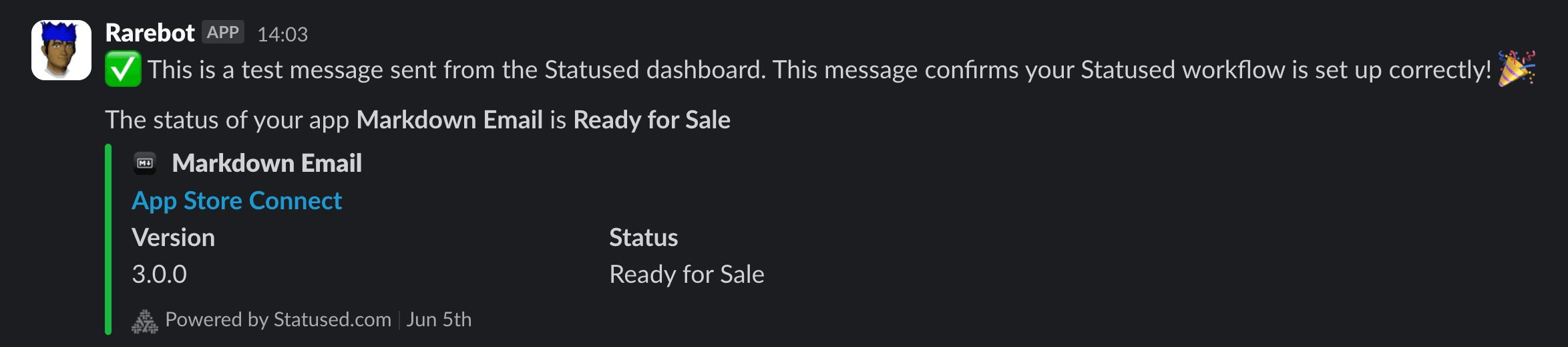
Once configured, messages will look like this:
Legacy webhook destinations remain available in workflow setup. You can combine them with native Slack targets when you intentionally want both deliveries.